 Up Trade Funded
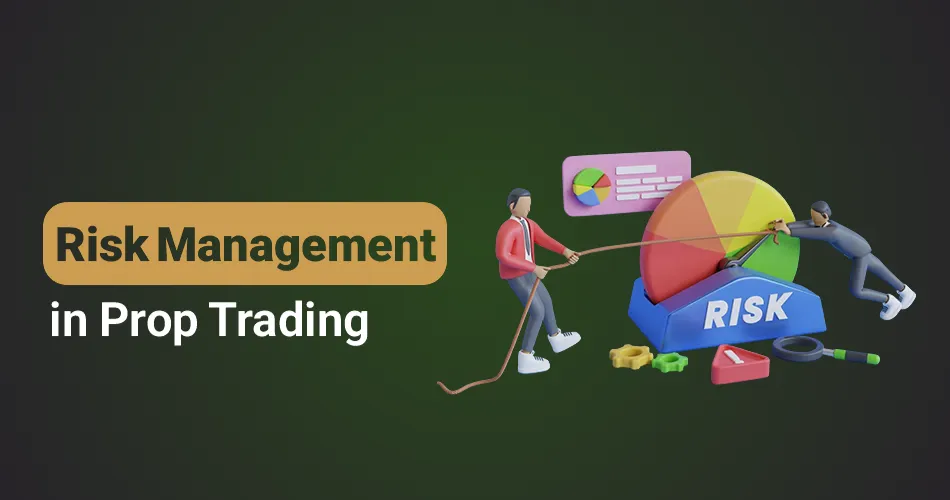
If you do not have a mathematical risk management model, you are not a trader; you are a gambler utilizing a very expensive charting platform. In this institutional-grade guide, we break down the exact position sizing formulas, drawdown defense mechanisms, and survival strategies used by top 1% funded traders to protect their evaluation capital.
“95% of traders fail prop challenges because their risk management is fundamentally broken. They treat a $100,000 evaluation account as if they actually have $100,000 to risk, ignoring the fact that their true capital is simply the $3,000 maximum drawdown limit.” - Chief Risk Officer, Major Prop Firm
1. Why Risk Management is the Key to Success
Why do so many talented, profitable retail traders fail the moment they purchase a prop firm evaluation? According to recent comprehensive data reports from major funding companies, nearly 70% of challenge failures are a direct result of breaching the maximum daily drawdown limits, not because of a lack of profitable trade setups.
There is a massive structural difference between retail trading and proprietary trading. In a personal retail account, a 10% drawdown is merely a temporary setback; you can hold your trades, wait weeks for a macroeconomic reversal, and eventually recover the capital. However, in the prop firm environment, a 5% daily drawdown means immediate, unappealable account termination.
Prop firms are not testing your ability to make massive, leveraged returns; they are evaluating your ability to protect their corporate capital during highly adverse market conditions. If you cannot manage downside risk, you will not receive funding, regardless of how good your technical analysis is.
2. Understanding Prop Firm Drawdown Rules
Before you place a single trade, you must intimately understand the rules of the game. Every prop firm establishes strict boundaries designed to weed out reckless traders. You must build your entire trading strategy around these constraints.
Table 1: Drawdown Rules Across the Top Prop Firms (2026)
| Prop Firm | Standard Account Size | Daily DD Limit | Overall DD Limit | Drawdown Type |
|---|---|---|---|---|
| Apex Trader Funding | $50,000 | None | $2,500 (5%) | Intraday Trailing |
| Topstep | $50,000 | $1,000 (2%) | $2,000 (4%) | End of Day (EOD) |
| TradeDay | $50,000 | $1,250 (2.5%) | $2,000 (4%) | End of Day (EOD) |
| Blusky Trading | $50,000 | $1,250 (2.5%) | $2,500 (5%) | Intraday (Static when funded) |
As shown above, the limits are tight. Your entire risk management model must ensure that a standard statistical losing streak (e.g., 5 losses in a row) does not breach the daily or overall drawdown limit.
3. The Mathematics of Position Sizing
Proper position sizing is the mathematical heartbeat of professional trading. You should never guess your lot size based on how “confident” you feel about a setup.
To calculate your exact lot size or number of futures contracts, you must use the following formula: Position Size = (Total Account Risk in Dollars) / (Stop Loss Distance in Ticks/Pips * Value per Tick/Pip)
Example: You are trading a $50k account. You decide to risk $100 per trade. You are trading the E-mini S&P 500 (ES). Your stop loss is 10 points (40 ticks) away. The tick value for ES is $12.50.
- Risk: $100
- Stop Loss Cost: 40 ticks * $12.50 = $500 per contract.
- Position Size: $100 / $500 = 0.2 Contracts. Since you cannot trade 0.2 of an ES contract, you MUST scale down to the Micro E-mini (MES), which is 1/10th the size. You would trade 2 MES contracts.
4. The 1% Rule vs. The Prop Firm Rule
In traditional retail trading, the golden rule is “Never risk more than 1% to 2% of your account balance per trade.”
If you follow this rule on a prop firm, you will blow your account.
If you have a $100,000 prop account and you risk 1% ($1,000) per trade, but your Daily Loss Limit is $2,000, you will fail the challenge after just TWO consecutive losing trades. Two losses in a row is an incredibly common occurrence for even the best traders in the world.
The Prop Firm Rule: You must risk a percentage of your Maximum Drawdown, not your nominal balance. If your Max Drawdown is $3,000, your true account size is $3,000. Risking 1% to 2% of your true capital means you should only be risking $30 to $60 per trade. This conservative sizing guarantees you can survive a massive 10-trade losing streak.
5. Calculating Risk with a Trailing Drawdown
Firms like Apex Trader Funding utilize an Intraday Trailing Drawdown. This metric trails your highest floating open equity in real-time.
This severely impacts how you manage risk during an active trade. If you are risking $50 to make $200, and the trade floats up to +$150 but you refuse to close it, your trailing drawdown floor has moved up $150. If the trade then reverses and hits your $50 stop-loss, you haven’t just lost $50. Your trailing drawdown has essentially “eaten” a total of $200 of your safety buffer.
To manage risk with a trailing drawdown, you must implement highly aggressive trailing stops. Once a trade moves to a 1:1 risk/reward ratio, you must move your stop to breakeven to protect your trailing drawdown floor.
6. Managing the Daily Loss Limit (DLL)
The Daily Loss Limit is a hard stop implemented by firms like Topstep. If your equity touches this number at any point in the day, you instantly fail.
The 3-Strike Rule: To manage the DLL, professional traders use the 3-Strike Rule. You divide your daily loss limit into three distinct “bullets.” If your DLL is $1,000, each bullet is worth $333. You are allowed to take three trades per day. If you lose the first trade, you are down 1 strike. If you lose three trades in a row, you walk away from the screens for the day. You never allow yourself to get close to the $1,000 hard limit, completely avoiding the emotional desperation of the “near-miss” zone.
7. The Concept of Asymmetric Risk-to-Reward
Risk management is not just about avoiding losses; it is about ensuring that your winning trades mathematically outweigh your losing trades. This is called Asymmetric Risk-to-Reward (R:R).
Table 2: Win Rate Required to Break Even at Various R:R Ratios
| Risk:Reward Ratio | Definition | Required Win Rate to Break Even |
|---|---|---|
| 1:1 | Risk $100 to make $100 | 50% |
| 1:2 | Risk $100 to make $200 | 33% |
| 1:3 | Risk $100 to make $300 | 25% |
| 1:5 | Risk $100 to make $500 | 17% |
By targeting a 1:2 or 1:3 R:R, you mathematically remove the pressure to “be right” all the time. You can literally be wrong 60% of the time and still generate enough profit to pass the prop firm evaluation.
8. Survival Strategy 1: The “Buffer” Phase
When you first open an evaluation account, or when you receive your first live funded account, your priority is NOT to hit the profit target. Your priority is to build a safety buffer.
During the Buffer Building Phase, you must use microscopic lot sizes (e.g., 1 Micro contract). Your goal is to secure small, consistent base-hits until you have generated a $500 to $1,000 profit cushion above your starting balance. Only once this buffer is secured do you increase your lot size to standard risk parameters. This ensures that your first inevitable losing streak eats into your generated profits, rather than eating into your core drawdown limit.
9. Survival Strategy 2: The Anti-Martingale
Amateurs use the Martingale strategy: when they lose a trade, they double their lot size on the next trade to “win it back.” This is mathematically guaranteed to blow an account.
Professionals use the Anti-Martingale strategy: when they suffer a loss, they decrease their position size on the next trade. If you risk $100 and lose, your next trade should only risk $50. If you lose again, your next trade risks $25. This systematic reduction in risk mathematically ensures that it is practically impossible to hit your Daily Loss Limit, forcing you to survive until your edge eventually presents a winning setup.
10. The Dangers of Overleveraging During News
Prop firm risk management requires strict adherence to the macroeconomic calendar. If you enter a trade risking $100 with a 10-tick stop loss right before the US CPI (Inflation) data releases, you are exposed to catastrophic slippage.
During high-impact news, liquidity vanishes from the order book. The market can gap 50 ticks past your stop loss before executing your order. Your $100 risk instantly becomes a $500 realized loss. Professional risk management dictates that you flatten all positions 5 minutes prior to any “Red Folder” macroeconomic news event to protect your drawdown capital from slippage.
11. Utilizing Trade Copiers for Risk Distribution
For advanced traders utilizing firms like Apex (which allows up to 20 accounts), risk management involves horizontal scaling.
Instead of risking 2% ($1,000) on a single $50k account to try and make a massive return, a trader will open ten $50k accounts. They will use a trade copier (like Replikanto) and risk an incredibly safe 0.2% ($100) per account. If the trade loses, the drawdown on each account is negligible. If the trade wins and hits a $200 target, the trader makes $200 across 10 accounts, netting a massive $2,000 profit for the day while keeping individual account risk microscopic.
12. Frequently Asked Questions
What percentage should I risk per trade on a prop firm?
You should risk between 1% and 2% of your Maximum Overall Drawdown limit (not the nominal account balance). For an account with a $2,500 drawdown limit, your risk per trade should be between $25 and $50.
How do I calculate my risk if I don’t know where my stop loss will be?
You cannot enter a trade if you do not know where your stop loss will be. Your stop loss placement determines your lot size. If you enter a trade blindly, you are gambling, not managing risk.
Why do I keep hitting my daily loss limit?
You are likely experiencing the “near-miss” psychological trap, or you are revenge trading. You must implement the “3-Strike Rule” and physically walk away from the charts after three consecutive losses.
Is a 1:1 Risk-to-Reward ratio viable for prop firms?
Yes, but only if you have a highly mechanical scalping strategy with a verified backtested win rate exceeding 60%. If your win rate drops, a 1:1 ratio will slowly bleed your account dry due to commission costs.
Can I use a risk management EA (Expert Advisor) on prop firms?
Yes, highly recommended. Utilizing a trade management EA or software like the TopstepX platform that automatically sizes your lots based on your stop-loss distance is the best way to eliminate human math errors during live trading.
13. Conclusion
The proprietary trading industry offers retail traders the ability to access life-changing capital, but that access comes with a brutal, mathematically unforgiving set of rules.
Your technical analysis and strategy are merely the engine of your trading vehicle; risk management is the steering wheel, the brakes, and the seatbelt. By abandoning the vanity of the nominal account balance, sizing your positions strictly based on the drawdown limit, employing the Anti-Martingale strategy during losing streaks, and executing with a 1:2 Risk-to-Reward ratio, you will mathematically bulletproof your evaluation accounts and secure long-term funding.